
Storm Damage Tree Cleanup in Dallas, TX
North Texas weather can turn a quiet neighborhood into a tangle of broken limbs and uprooted trees in a matter of minutes. Spring thunderstorms bring straight-line winds and hail, tornadoes cut narrow paths of severe damage, and winter ice storms load branches until they snap. Dallas residents saw this firsthand during the 2019 North Dallas tornado and the May 2024 windstorm that left trees down across the city. Aguilar Tree Service provides storm damage cleanup in Dallas, TX for homeowners and businesses that need fallen trees removed, hanging branches cleared, and debris hauled away so their property is safe and usable again.
Call Aguilar Tree Service
today for storm damage cleanup in Dallas, TX.
Fast Help After North Texas Storms
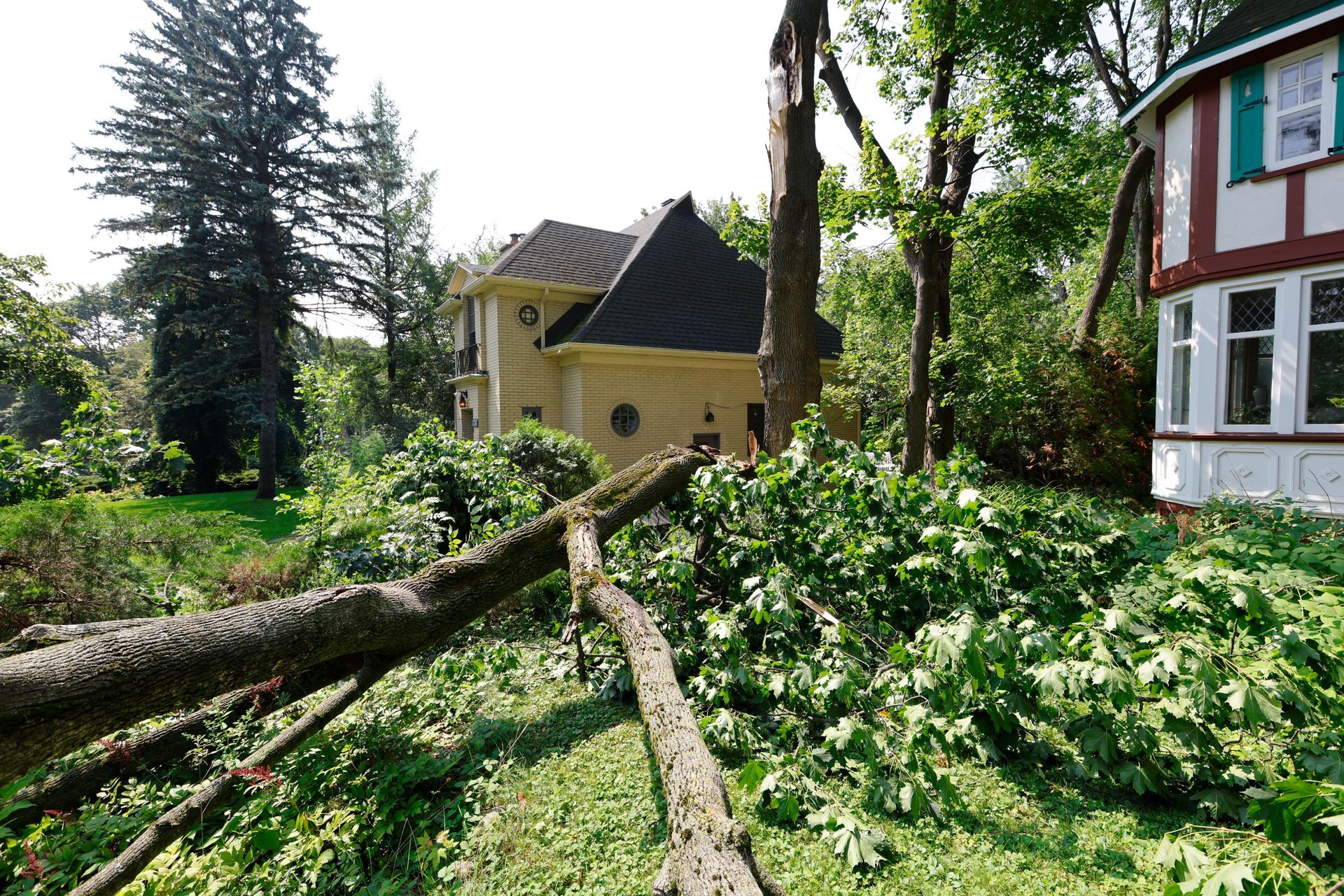
After a major storm, the damage is often bigger than what you can see from the ground. A tree that looks upright may have a cracked trunk or loosened roots. Broken limbs can remain lodged high in the canopy, ready to fall at any time. Trees partly uprooted by saturated clay soil can continue leaning over the following days as the ground shifts.
Storm damage cleanup starts with identifying the most urgent hazards. Trees resting on homes, garages, and vehicles come first, followed by trees blocking driveways and access points, then hanging limbs over areas where people walk. Once the immediate dangers are addressed, storm damage cleanup moves to removing downed limbs and debris, cutting back torn branch stubs, and evaluating standing trees that may have been weakened. Working in this order makes the property safe as quickly as possible and prevents secondary damage.
Tree Removal
Fully Licensed & Insured for Emergency Work
Aguilar Tree Service is fully licensed and insured, protecting property owners and crew members during high-risk work such as removing trees from roofs and clearing storm damage.
03
Storm Damage We Handle
Storm damage cleanup covers a wide range of tree damage caused by Dallas weather.
Wind Damage
Straight-line winds and tornadoes snap trunks, tear limbs from unions, and uproot trees whose roots are already stressed by drought or poor soil conditions.
Ice and Winter Storm Damage
Ice accumulation adds enormous weight to branches. Live oaks, Bradford pears, and other trees with dense canopies are especially prone to losing large limbs during ice events.
Hail Damage
Heavy hail strips leaves, wounds bark, and breaks small branches throughout the canopy. Hail wounds can open the door to decay and disease if the tree is already stressed.
Saturated Soil and Uprooting
Heavy rain softens Dallas clay soil and weakens the root plate. Combined with strong winds, saturated soil allows trees to tip or uproot entirely.
Lightning Strikes
Lightning can split trunks, blow off bark, and damage the internal tissue of a tree. Struck trees should be evaluated for structural damage even when they appear mostly intact.
Fallen Tree Removal
Fallen trees are the most serious part of storm damage cleanup, especially when they land on homes, garages, fences, cars, or driveways. A tree resting on a structure must be removed in a controlled sequence, with limbs and trunk sections cut and lowered so the weight comes off gradually rather than shifting or dropping onto the roof.
Fallen trees are often under tension and compression from the way they landed. Branches pinned under the trunk can spring when cut, and trunks can roll unexpectedly. Storm damage cleanup crews read how the tree is loaded before every cut. Trees lying in the yard are cut into manageable sections, branches are chipped, and the wood is hauled away or left in firewood lengths if requested.
Partially Uprooted Trees
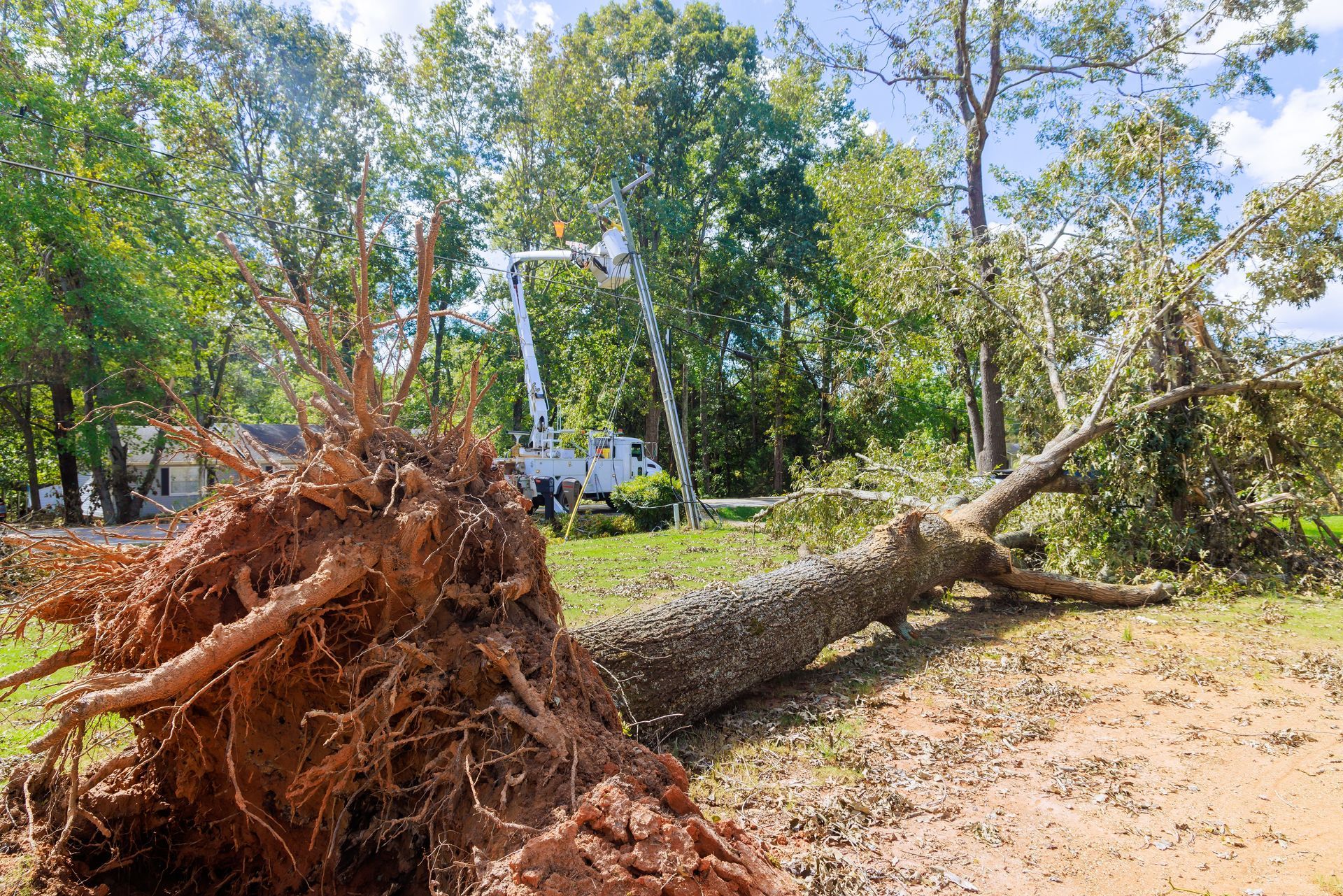
A tree that has tipped but not fallen completely is one of the most dangerous situations after a storm. The root plate may be holding the tree for now, but further rain or wind can bring it down. Partially uprooted trees generally need to be removed as part of storm damage cleanup.
Broken & Hanging Branch Removal
Broken and hanging branches are easy to overlook after a storm, but they are a serious hazard. Limbs that snap during high winds often catch in the canopy and remain suspended, sometimes for weeks, until a breeze or a squirrel knocks them loose. These hangers can weigh hundreds of pounds and fall onto roofs, cars, patios, and people below.
Storm damage cleanup includes climbing or using lifts to reach these limbs, securing them, and lowering them with ropes. Torn branch stubs left by the storm are also cut back to clean pruning points, which helps the tree seal the wounds and reduces the risk of decay setting in.
Corrective Pruning After Storms
Trees that survive a storm with partial damage often benefit from corrective pruning to rebalance the canopy and remove weakened limbs. Many storm-damaged trees can be saved when the trunk and main structure remain sound.
Request a free estimate from Aguilar Tree Service
for storm damage cleanup on your Dallas property.
After the hazards are cleared, storm damage cleanup moves on to restoring the property. Downed limbs, leaves, and debris are gathered from lawns, driveways, roofs, gutters, and landscape beds. Branches are chipped or hauled away, and the yard is raked so it is safe and usable.
For commercial properties,
emergency property cleanup focuses on reopening parking lots, entrances, and walkways quickly so tenants and customers can access the property safely. Apartment communities, retail centers, office parks, churches, schools, and HOA common areas often have multiple trees affected after a major storm, and storm damage cleanup is prioritized based on safety and access.
Debris Hauling
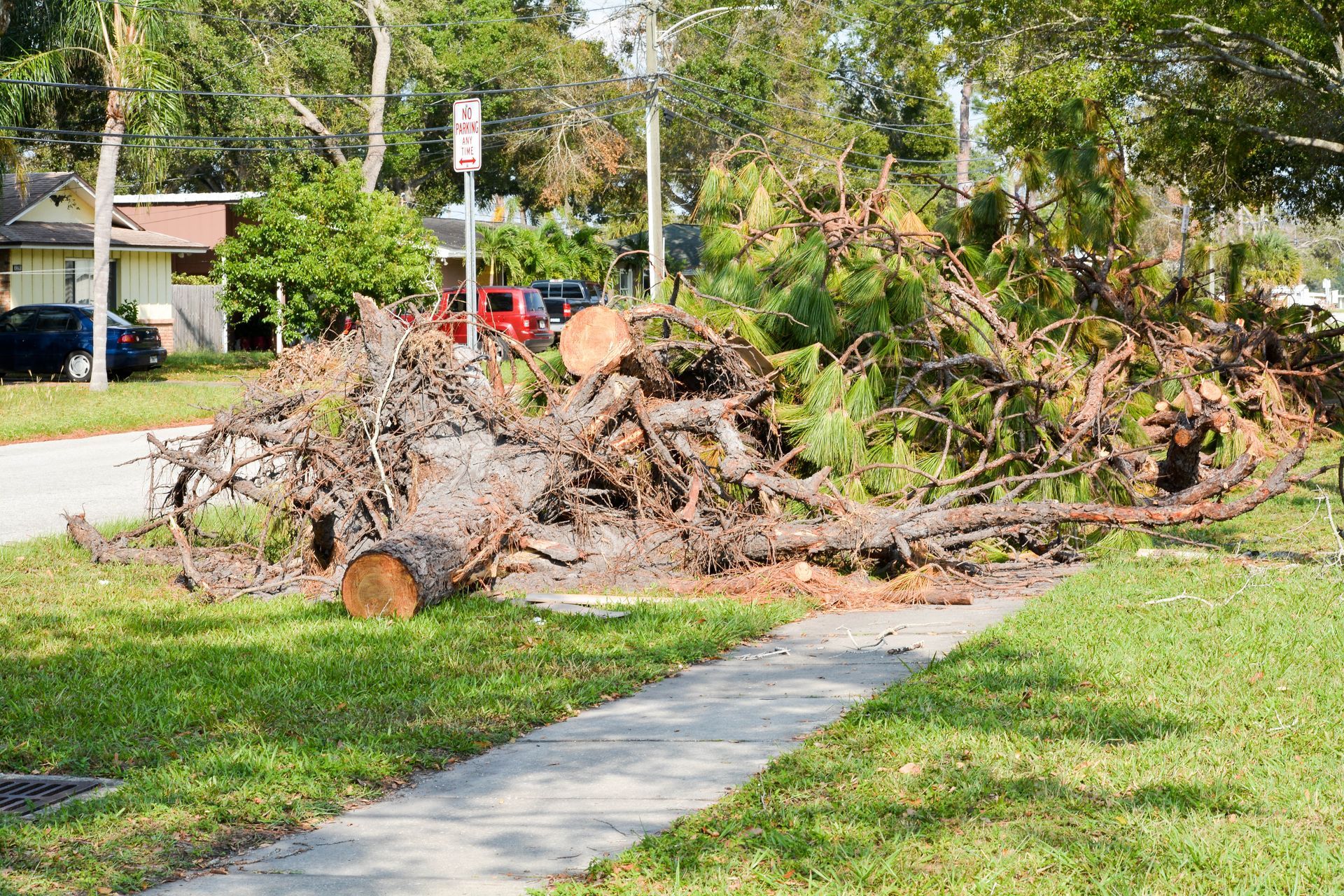
The City of Dallas offers brush and bulk trash collection and sometimes adds special storm debris pickups after major events, but collection can take weeks after a widespread storm. Hauling debris as part of storm damage cleanup clears the property right away.
Residential Tree Service
Insurance Documentation
Insurance often plays a major role in storm damage cleanup. Many homeowners insurance policies cover tree removal when a tree falls on an insured structure such as a house, garage, or fence, usually up to a set limit. Coverage for trees that fall in the yard without damaging a structure varies by policy.
Before storm damage cleanup begins, photograph the tree, the damage, and the surrounding area from several angles. Aguilar Tree Service
can provide documentation of the work performed, including photos and itemized invoices, to help support your claim with your insurance company.
Preventing Future Storm Damage
Storm damage cleanup handles what has already happened, but preventive tree care reduces the chance of the same problems recurring during the next storm. Regular tree trimming removes deadwood, weak unions, and overextended limbs that commonly fail in high winds. Canopy thinning allows wind to pass through rather than catching the crown like a sail. Cabling and bracing support trees with co-dominant trunks or heavy limbs at risk of splitting.
Tree health assessments identify decay, root problems, and structural defects before they lead to failure. Trees prone to storm breakage, such as Bradford pears, silver maples, and hackberries, may be worth replacing over time with stronger species suited to North Texas, including cedar elm, bur oak, Shumard red oak, and Chinquapin oak.
FAQs
What does storm damage cleanup include?
Storm damage cleanup includes removing fallen trees, clearing broken and hanging branches, removing trees damaged beyond recovery, corrective pruning on salvageable trees, and hauling away storm debris from the property.
How much does storm damage cleanup cost in Dallas?
Storm damage cleanup cost depends on the number and size of trees involved, whether trees are resting on structures, access to the site, and the amount of debris. Trees on roofs or tangled with other trees require more time and rigging. Insurance may cover part or all of the cost when a covered structure is damaged.
Does homeowners insurance cover storm damage tree cleanup?
Homeowners insurance usually covers tree removal when a storm causes a tree to fall on an insured structure, often up to a set limit per tree and per claim. Debris removal from trees that fell without hitting a structure may not be covered. Review your policy or contact your insurer for details.
Can a storm-damaged tree be saved?
Many storm-damaged trees can be saved if the trunk is intact, the root system is stable, and a good portion of the canopy remains. Corrective pruning and sometimes cabling help the tree recover. Trees with split trunks, major root failure, or most of the crown lost usually need removal.
How do I know if a tree is unsafe after a storm?
Signs of an unsafe tree include a new or worsening lean, cracked or raised soil around the base, exposed roots, cracks in the trunk, splits at major branch unions, and large broken limbs hanging in the canopy. Any of these signs should be evaluated before people spend time near the tree.
How soon should storm damage cleanup be done?
Trees on structures, blocking access, or hanging over people should be handled immediately. Remaining debris and damaged trees should be addressed as soon as possible, since weakened trees and hanging limbs can fail in the days and weeks after a storm.
What are hanging branches, and why are they dangerous?
Hanging branches are limbs broken by a storm that remain caught in the canopy. They can fall without warning, sometimes days or weeks later, and can cause serious injury or property damage. Removing them is a key part of storm damage cleanup.
Should I clean up storm damage myself?
Small branches and light debris on the ground can usually be handled by homeowners. Large fallen trees, trees on structures, hanging limbs, and anything near power lines should be left to an experienced storm damage cleanup crew because of the risk of shifting wood and falling debris.
What should I do if a storm knocks a tree onto a power line?
Stay far away from the tree and the line, keep others away, and contact Oncor or your electric provider immediately. Storm damage cleanup can begin only after the utility has made the area safe.
Will the City of Dallas pick up storm debris?
The City of Dallas collects brush and bulk trash on a regular schedule and sometimes offers special storm debris collection after major events. Pickup can take weeks after widespread storms, so many property owners include debris hauling in their storm damage cleanup.
Which trees are most likely to break during Dallas storms?
Bradford pears, silver maples, hackberries, and trees with co-dominant trunks or heavy, dense canopies are among the most likely to break. Trees weakened by drought, decay, or root damage are also more prone to failure.
How can I prevent storm damage to my trees?
Regular tree trimming, deadwood removal, canopy thinning, cabling and bracing on weak trees, and periodic tree health assessments all reduce the chance of storm damage. Replacing failure-prone species with sturdier trees over time also helps.
Request Emergency Service
If a storm has left a tree on your home, branches hanging over your driveway, or debris scattered across your yard or commercial property, Aguilar Tree Service is ready to help with storm damage cleanup. We serve homeowners, HOAs, and commercial property owners throughout Dallas and the surrounding communities and will provide a clear plan and price before work begins.
Contact Aguilar Tree Service
now to request storm damage cleanup in Dallas, TX.