
Professional Stump Grinding in Dallas, TX
Cutting down a tree solves one problem but often leaves another behind. The stump that remains takes up usable yard space, gets in the way of mowing, attracts insects, and can send up new sprouts for years. Aguilar Tree Service provides stump grinding in Dallas, TX for homeowners and businesses that want old stumps gone so the ground can be used again. Stump grinding reduces the stump to wood chips below the soil surface, clearing the way for sod, planting beds, fencing, patios, or new construction.
Call Aguilar Tree Service
today to schedule stump grinding in Dallas, TX.
Remove Unsightly & Hazardous Tree Stumps
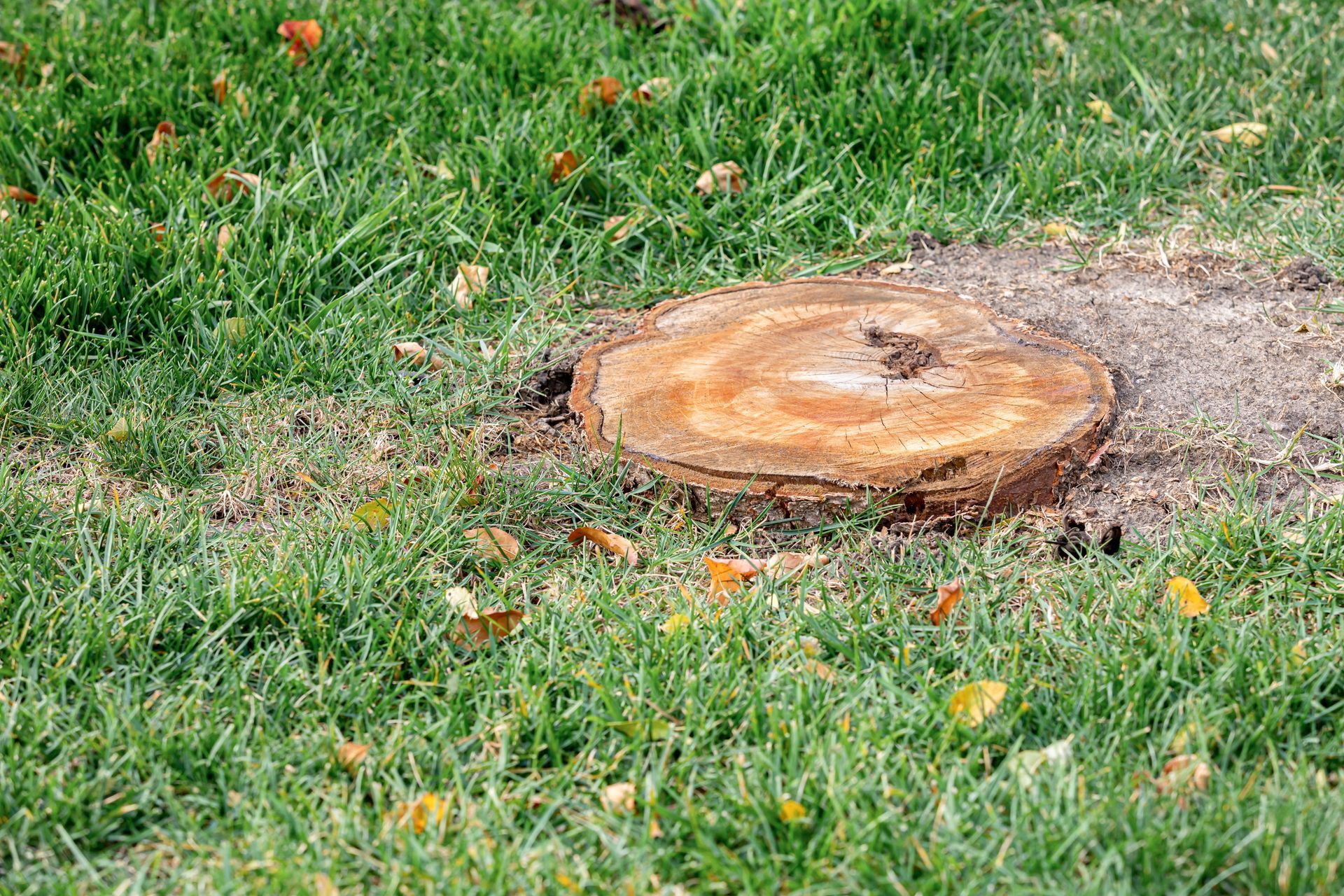
A stump may seem harmless, but it creates several ongoing problems on a Dallas property. Stumps are a trip hazard for children, guests, and customers, especially when grass grows up around them and hides the edges. They damage mower blades and make it difficult to maintain a clean, even lawn. In commercial settings, a stump in a parking island or along a walkway is a liability concern and an eyesore.
Decaying stumps also attract pests. Subterranean termites, carpenter ants, and wood-boring beetles are drawn to rotting wood, and a stump close to the house can bring those pests uncomfortably near the foundation. Fungi that feed on decaying stumps can spread through the root system as well.
Some tree species common in Dallas, including hackberry, cedar elm, chinaberry, and Bradford pear, can send up sprouts from the stump and roots after the tree is cut. Those sprouts grow quickly and can turn into a thicket if left alone. Stump grinding removes the growth point at the root crown and greatly reduces resprouting.
Stumps Left From Previous Owners or Storms
Many Dallas homeowners inherit stumps from previous owners or are left with stumps after storm cleanup. Stump grinding works on both fresh and old stumps, and older stumps that have started to soften are often faster to grind.
Tree Removal
Fully Licensed & Insured for Emergency Work
Aguilar Tree Service is fully licensed and insured, protecting property owners and crew members during high-risk work such as removing trees from roofs and clearing storm damage.
03
Stump Grinding vs. Stump Removal
Stump grinding and stump removal are two different approaches, and the right choice depends on what you plan to do with the space.
Stump Grinding
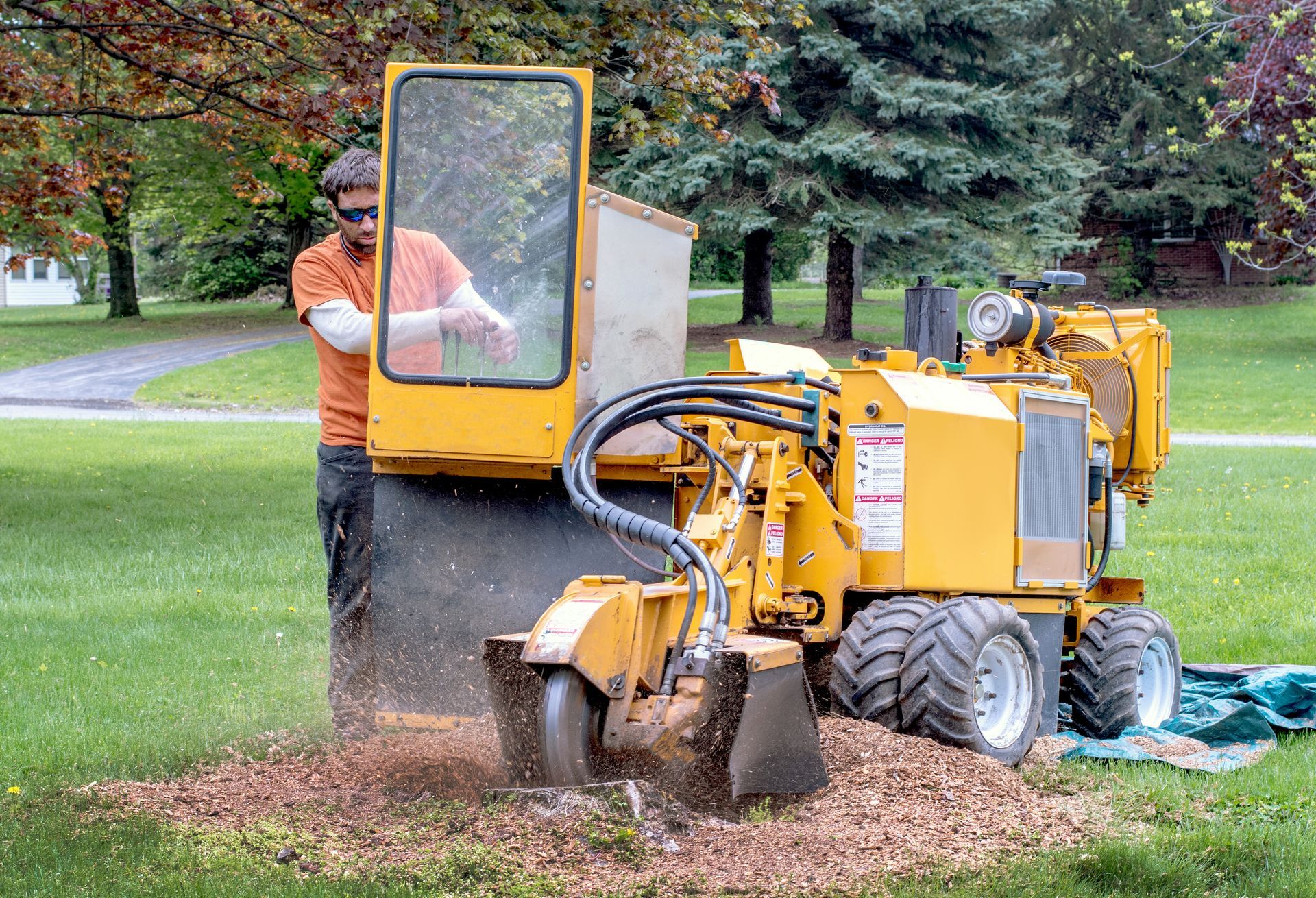
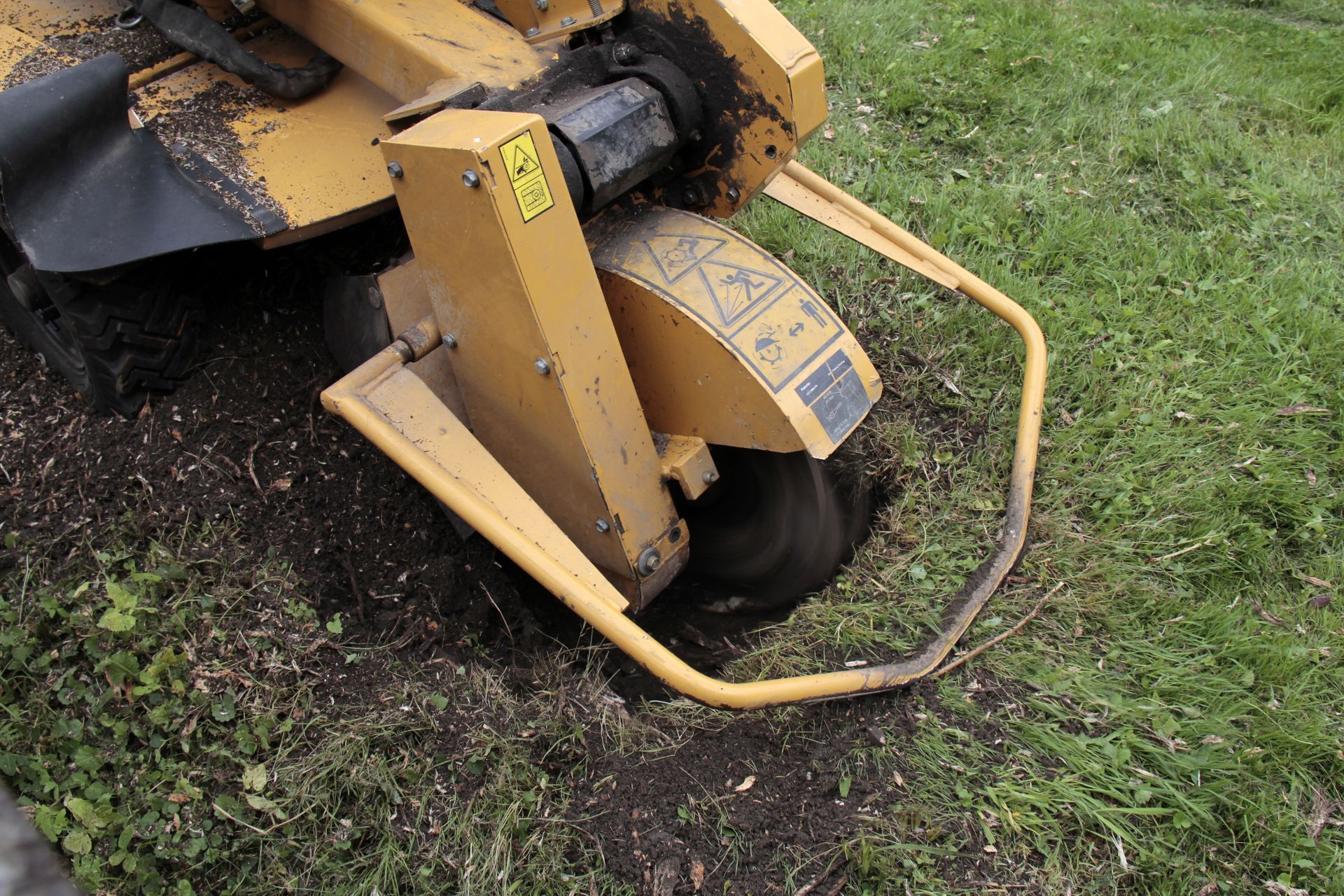
Stump grinding uses a machine with a rotating cutting wheel to chip the stump away until it sits several inches below ground level. The remaining roots are left in the soil, where they gradually decompose over the following years. Stump grinding is less disruptive to the surrounding lawn, works well in tight spaces, and leaves a much smaller area to restore afterward. For most residential and commercial properties in Dallas, stump grinding is the practical choice.
Stump Removal
Full stump removal, sometimes called stump extraction, pulls out the stump along with the main root ball. This leaves a large hole, disturbs a wide area of soil, and often requires heavy equipment. Stump removal is usually reserved for situations where the entire root system must come out, such as the footprint of a new foundation, pool, or structure.
Choosing the Right Option
If the goal is to replant grass, install a garden bed, or simply eliminate the stump, stump grinding is typically all that is needed. If major construction is planned directly over the stump location, full extraction may be required.
Our Stump Grinding Process
Every stump grinding job from Aguilar Tree Service follows a set process so the work is safe and the area is left ready for your next step.
01
Site Evaluation
The process starts with a look at the stump's size, the surrounding surface, nearby structures, fences, sidewalks, and irrigation lines, and the access path for equipment. Gate width, slopes, and landscaping between the street and the stump all affect how the stump grinding is performed.
02
Utility Locates
Stump grinding disturbs soil below the surface, so buried utilities need to be identified before work begins. Texas law requires calling 811 at least two business days before digging, and the free locate service marks underground gas, electric, water, and communication lines. Private lines such as sprinkler systems, landscape lighting, and gas lines to grills are not marked by 811, so property owners should point those out ahead of time.
03
Grinding the Stump
The grinder's cutting wheel is moved back and forth across the stump, chipping it down layer by layer until it sits below grade. Surface roots extending from the stump can also be ground out where needed. Shields and careful positioning keep flying chips contained.
04
Cleanup and Grindings
After stump grinding, the area is left with a mound of wood chips and soil. The grindings can be raked into the hole, spread as mulch, or hauled away depending on your preference.
Request a free estimate from Aguilar Tree Service for stump grinding on your Dallas property.
Residential Tree Service
What Happens After Grinding?
Once stump grinding is complete, the space is ready to be restored. What comes next depends on how you plan to use the area.
Filling the Hole
Most property owners remove the majority of the wood chips and fill the depression with topsoil. The soil will settle over the next several weeks as the material compacts and the remaining roots break down, so adding a little extra soil and topping it off later helps keep the surface level.
Planting Grass or Sod
Grass and sod grow best when the wood chips are removed and replaced with quality topsoil. Wood chips mixed into the soil draw nitrogen as they decompose, which can cause grass to yellow or grow poorly in that spot until the chips break down.
Replanting a New Tree
A new tree can be planted near the old location, but it is best to offset the planting by a few feet so the young tree is not competing with decaying roots. Choosing a species suited to Dallas clay and heat, such as cedar elm, Shumard red oak, bur oak, or Chinquapin oak, gives the new tree a better start.
Cleanup
Once the tree trimming is complete, branches are chipped or hauled away and the yard is raked and cleaned. Property owners can request to keep wood chips for mulch.
Using the Grindings as Mulch
Stump grindings work well as mulch in landscape beds and around existing trees. Keeping mulch a few inches away from trunks and foundations prevents moisture problems and discourages termites.
Residential & Commercial Stump Grinding
Residential stump grinding in Dallas often involves backyards with limited access, stumps close to fences, patios, and foundations, and lawns that need to be protected during the work. Homeowners commonly schedule stump grinding after a tree removal, before sodding or landscaping, or when an old stump has become an obstacle to mowing and yard use. Many backyards in neighborhoods like Lake Highlands, Lakewood, and Oak Cliff are reached only through narrow side gates, so equipment selection and access planning are part of every residential job.
Commercial stump grinding serves apartment complexes, retail centers, office parks, HOA common areas, churches, and schools. Commercial stump grinding removes stumps from parking islands, entrances, walkways, and landscaped areas where they create trip hazards and detract from the property's appearance. Multiple stumps can be ground in a single visit, and work can be scheduled to limit disruption to tenants and customers.
Multiple Stumps and Lot Clearing
Properties being cleared for construction, fencing, or redevelopment often have several stumps to address. Grinding all of them in one visit is more efficient and prepares the site for grading and new work.
FAQs
What is stump grinding?
Stump grinding is the process of using a machine with a rotating cutting wheel to chip a tree stump down below ground level. The stump is reduced to wood chips, and the remaining roots are left to decompose naturally in the soil.
How much does stump grinding cost in Dallas, TX?
Stump grinding cost in Dallas depends mainly on the stump's diameter, along with root flare, accessibility, the number of stumps, and whether the grindings are hauled away. A small stump in an open yard costs much less than a large oak stump in a fenced backyard. An on-site estimate provides the most accurate price.
How deep does stump grinding go?
Stump grinding typically takes the stump several inches below ground level, which is enough to plant grass or sod over the area. Deeper grinding can be done when you plan to plant a tree nearby or install hardscaping.
Do the roots die after stump grinding?
For most species, removing the stump and root crown stops the roots from producing new growth, and they gradually decompose over several years. Some species that sprout aggressively from roots may send up occasional shoots, which can be cut back until the root system is exhausted.
Will a tree grow back after stump grinding?
Most trees will not grow back after stump grinding because the growth point at the root crown is removed. Species known for root suckering, such as hackberry or chinaberry, may produce a few sprouts afterward that should be clipped as they appear.
Is stump grinding better than stump removal?
For most properties, stump grinding is the better option because it is faster, less expensive, and much less disruptive to the lawn and surrounding landscape. Full stump removal is mainly needed when construction will take place directly over the stump location.
How long does stump grinding take?
Most stumps can be ground in under an hour, depending on size and wood hardness. Large stumps, stumps with extensive surface roots, or jobs with multiple stumps take longer.
What do I do with the wood chips after stump grinding?
The wood chips can be used as mulch in landscape beds, raked back into the hole, or hauled away. If you plan to plant grass in that spot, removing most of the chips and filling the area with topsoil gives the best results.
Can I plant grass right after stump grinding?
Yes, once the wood chips are removed and the area is filled with topsoil. Leaving a large amount of wood chips in the soil can slow grass growth as the chips decompose and draw nitrogen from the soil.
Do I need to call 811 before stump grinding?
Yes. Stump grinding disturbs the soil below the surface, and Texas law requires calling 811 at least two business days before digging so underground utilities can be marked. Private lines such as irrigation and landscape lighting are not marked and should be identified by the property owner.
Do old stumps attract termites?
Decaying stumps can attract subterranean termites, carpenter ants, and other wood-feeding insects. A stump near the house can bring these pests closer to the foundation, which is one of the main reasons property owners schedule stump grinding.
Can stump grinding be done in a fenced backyard?
In many cases, yes. Compact stump grinders can fit through standard side gates, allowing stump grinding in backyards that larger equipment cannot reach. Gate width and access are checked during the estimate.
Request an Estimate
Whether you have one stump left from a recent tree removal, several old stumps scattered across your yard, or stumps in a commercial parking area that need to go, Aguilar Tree Service will evaluate the site and provide a clear plan and price before any work begins. We provide stump grinding for homeowners, HOAs, and commercial properties throughout Dallas and the surrounding communities.
Contact Aguilar Tree Service
now to request your stump grinding estimate in Dallas, TX.