
Tree Cabling & Bracing in Dallas, TX
Some of the most valuable trees in Dallas are also the most vulnerable. A century-old live oak with two massive trunks, a pecan with long horizontal limbs, or a red oak with a V-shaped union can provide decades of shade and character, yet carry structural weaknesses that put them at risk of splitting during the next storm. Aguilar Tree Service provides tree cabling and bracing in Dallas, TX to add supplemental support to trees with weak branch unions, co-dominant trunks, and heavy limbs. Cabling and bracing can reduce the likelihood of failure and help preserve a tree that might otherwise need to be removed.
Call Aguilar Tree Service
today to schedule tree cabling and bracing in Dallas, TX.
Supporting Weak or Vulnerable Trees
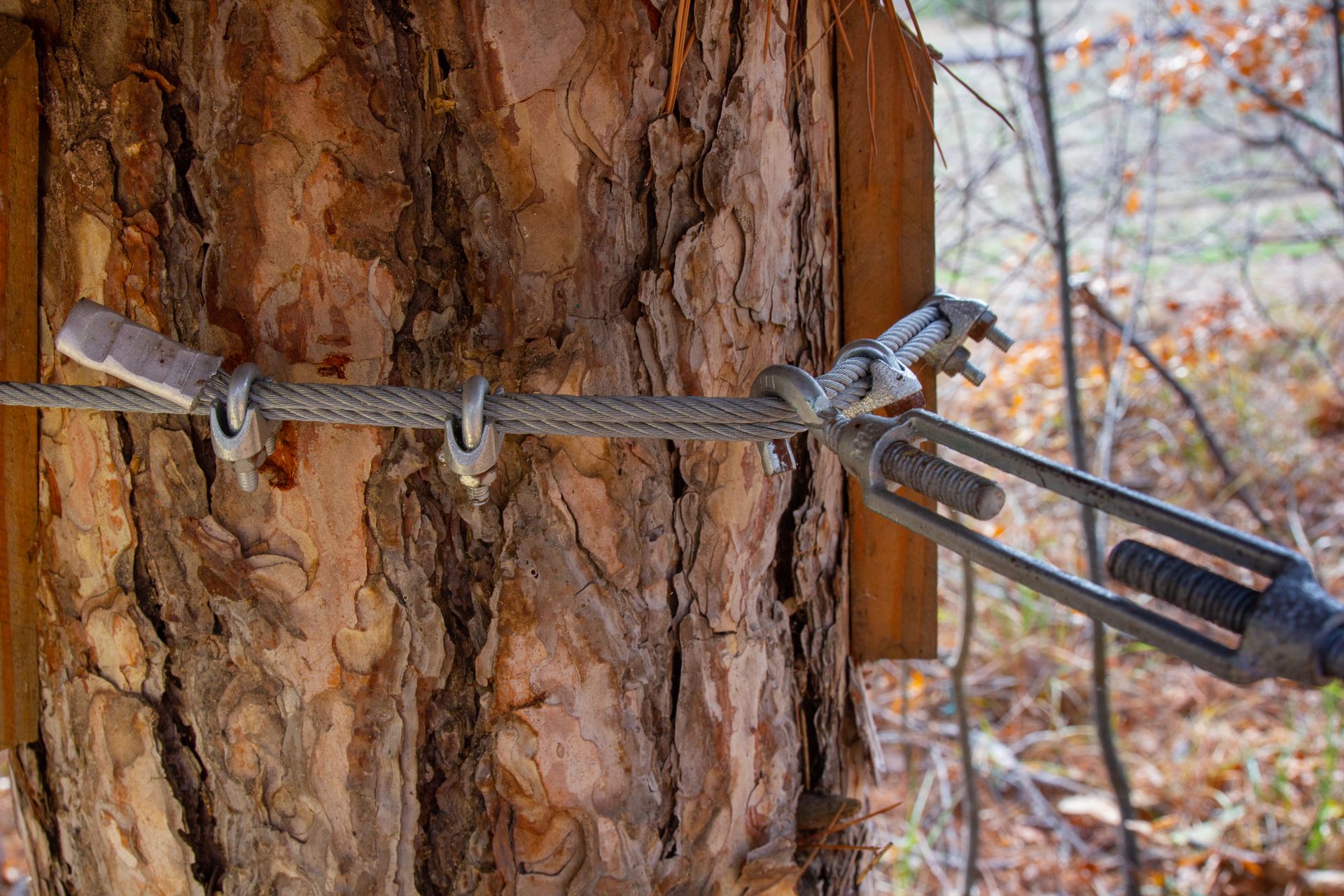
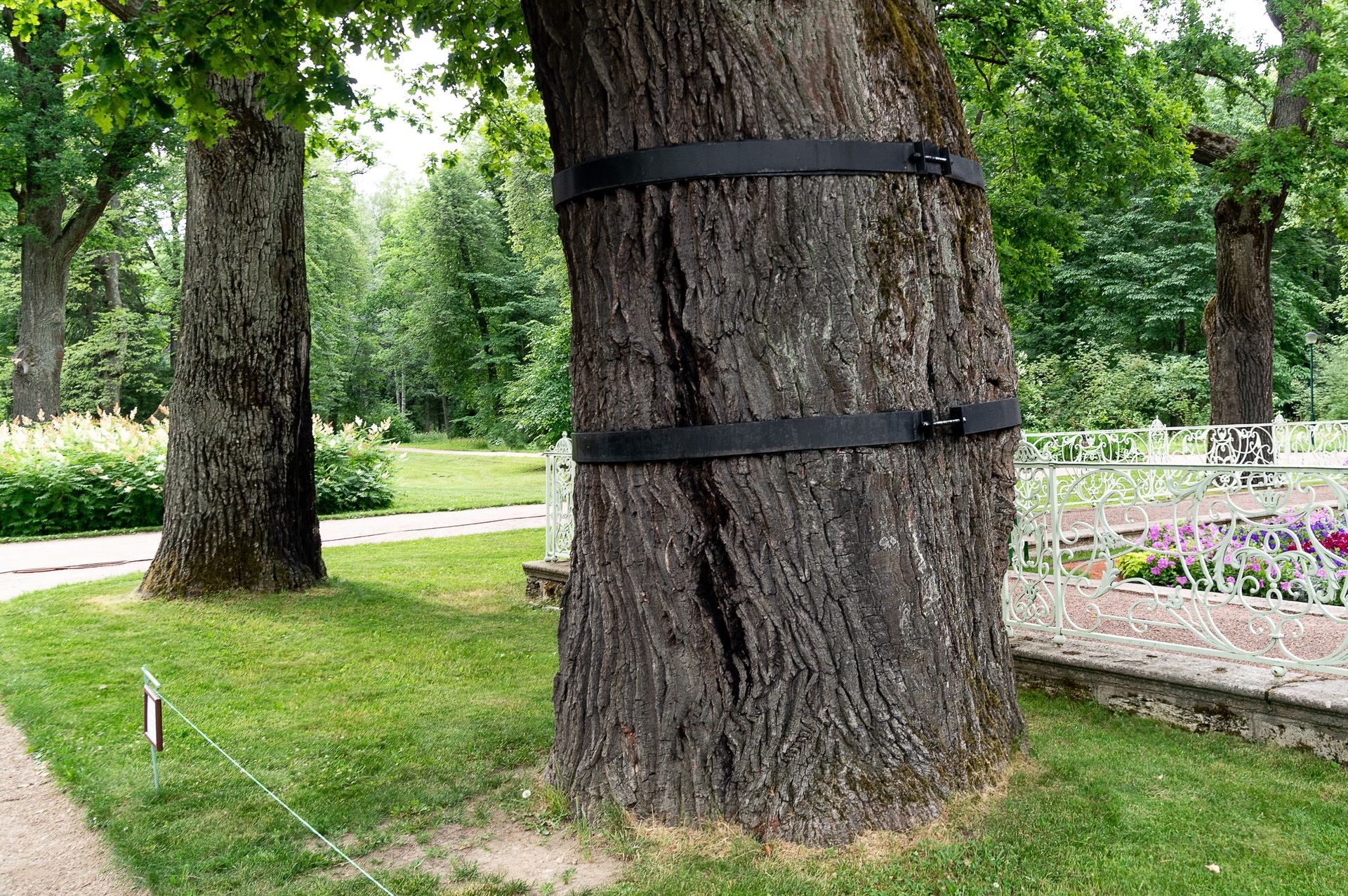
Tree cabling and bracing are supplemental support systems installed to limit the movement of weak parts of a tree. Cabling uses high-strength steel or synthetic cables installed in the upper canopy between major limbs or stems. When wind pushes one limb away from the other, the cable shares the load and reduces the stress placed on the weak union below. Bracing uses threaded steel rods installed through stems or limbs lower in the tree to hold weak unions together or stabilize existing cracks.
Cabling and bracing do not repair a structural defect, and they do not make a tree failure-proof. What they do is reduce the strain on weak areas so the tree is less likely to split under wind, ice, or the weight of its own growth. Installations follow industry standards for supplemental support systems, including ANSI A300, which guide hardware selection, placement, and installation methods.
Static and Dynamic Cabling
Static cabling uses steel cable that holds limbs firmly in place and is typically used where a defect is more serious or a crack is already present. Dynamic cabling uses synthetic rope systems that allow some natural movement while still limiting extreme motion. The right choice depends on the tree's condition, the type of defect, and how much support it needs.
Tree Removal
Fully Licensed & Insured for Emergency Work
Aguilar Tree Service is fully licensed and insured, protecting property owners and crew members during high-risk work such as removing trees from roofs and clearing storm damage.
03
When Does a Tree Need Cabling?
Tree cabling is recommended when a tree has a structural weakness that can be supported rather than removed.
Co-dominant Trunks
Co-dominant stems are two trunks of similar size growing from the same point. Because neither trunk dominates, the union between them is often weak, and the trunks can split apart in strong winds. Co-dominant trunks are one of the most common reasons for tree cabling in Dallas.
V-Shaped Unions with Included Bark
When two stems grow together at a narrow angle, bark can become trapped between them instead of forming a strong connection of wood. This included bark creates a weak point that is prone to splitting.
Heavy or Overextended Limbs
Long horizontal limbs, common on live oaks and pecans, carry a great deal of weight far from the trunk. Cabling can support these limbs and reduce the chance that they tear away at the attachment point.
Trees Over High-Value Targets
Trees with structural weaknesses that sit over homes, driveways, patios, play areas, or parking lots are strong candidates for tree cabling and bracing because the consequences of failure are greater.
Trees with Prior Storm Damage
Trees that have lost a major limb or developed cracks during past storms may benefit from cabling and bracing to stabilize the remaining structure.
Tree Bracing Solutions
Bracing is used when a weak union or crack needs rigid support lower in the tree. Steel rods are installed through the stems or limbs at the weak point, holding the sections together and reducing movement that would cause a crack to widen.
01
Bracing Split Unions
When a union has already started to crack, bracing rods can be installed across the split to keep the stems from separating further. Bracing is usually paired with cabling higher in the canopy so the load is shared between the two systems.
02
Bracing Rubbing or Crossing Limbs
In some cases, two limbs that rub together are braced to stop movement, allowing the tree to form a stronger connection over time rather than wearing away bark.
03
Combining Cabling and Pruning
Cabling and bracing are often paired with crown reduction or selective thinning. Reducing the weight and wind resistance of the supported limbs lowers the load placed on both the tree and the hardware, making the entire system more effective.
Request a free estimate from Aguilar Tree Service for tree cabling and bracing in Dallas.
Protecting Mature Trees
Mature trees are difficult to replace. A large live oak or pecan can take generations to reach full size, and removing one changes the shade, temperature, and character of a property. Tree cabling and bracing give property owners an option between living with a risky tree and removing it entirely.
Dallas conditions make support systems especially worthwhile. The expansive clay soil, long droughts, and severe spring storms of North Texas place heavy stress on older trees. Live oaks, pecans, post oaks, and red oaks in established neighborhoods such as Preston Hollow, Lakewood, Highland Park, and Kessler Park often develop the broad, spreading structure that benefits from tree cabling.
Ongoing Inspection
Cabling and bracing systems should be inspected periodically and after major storms. Over time, trees grow, hardware can loosen, and cables may need adjustment or replacement. Regular inspection keeps the system working as intended and catches new issues before they become serious.
Residential Tree Service
Our Tree Assessment Process
Every tree cabling and bracing job begins with a careful assessment of the tree to determine whether support is appropriate.
Structural Evaluation
The assessment looks at the tree's species, size, branch structure, unions, cracks, cavities, and signs of decay. The goal is to identify where the weak points are and whether the surrounding wood is sound enough to hold hardware.
Risk and Target Review
The assessment also considers what lies beneath the tree, including homes, vehicles, walkways, and gathering areas. Trees over high-value targets may warrant more support or, in some cases, removal.
Recommendation
If the tree is a good candidate, a plan is developed that outlines cable and bracing locations, hardware type, and any pruning needed to reduce weight. If the tree has too much decay or damage for cabling and bracing to be effective, removal may be the safer recommendation.
Installation
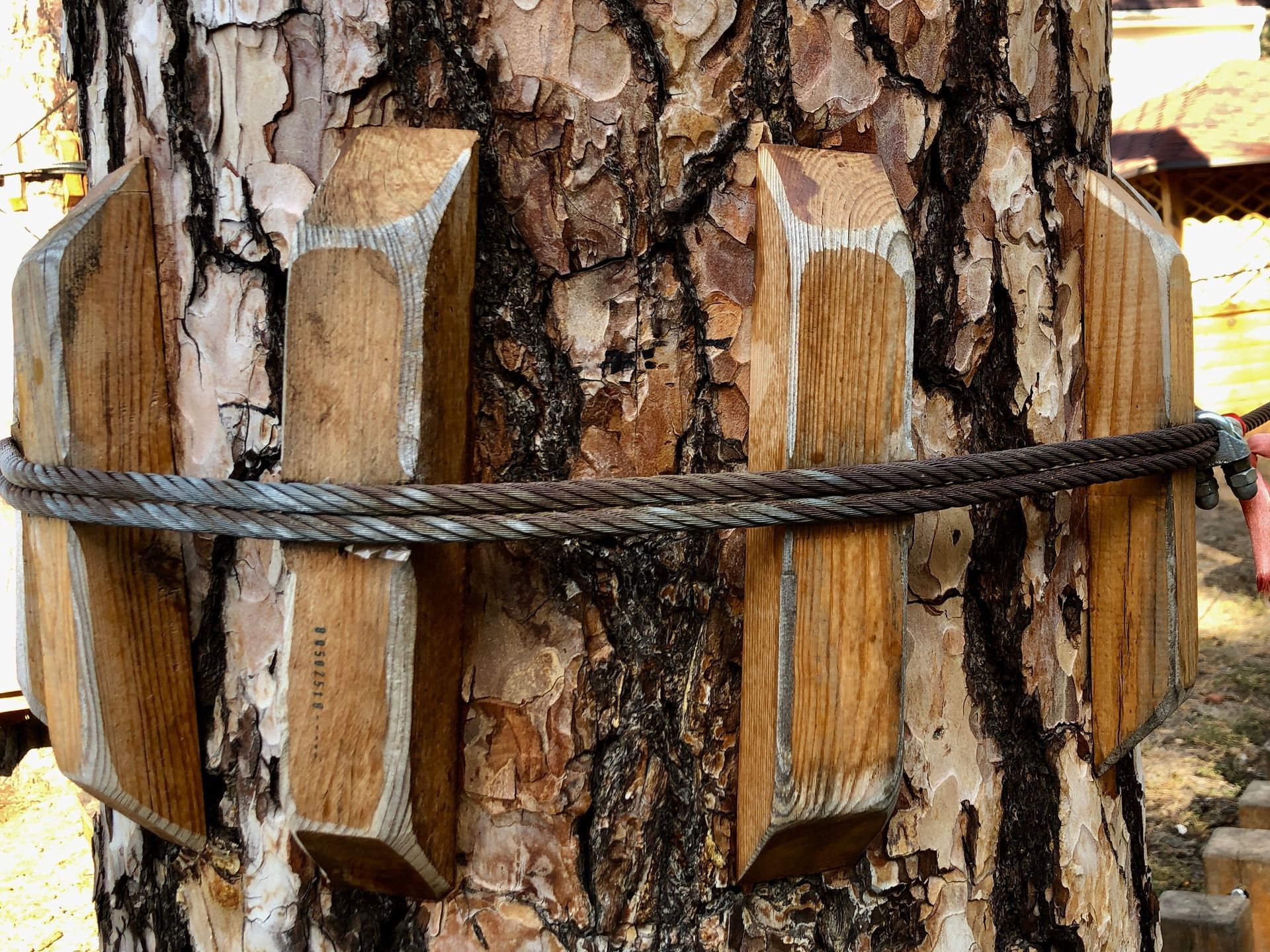
Hardware is installed according to accepted standards, with cables typically placed around two-thirds of the distance from the weak union to the tops of the supported limbs. Proper placement provides leverage and support where it is most effective.
Residential & Commercial Applications
Residential tree cabling in Dallas typically focuses on large shade trees over homes, driveways, patios, and play areas. Homeowners often choose cabling and bracing to keep a beloved mature tree that has developed a weak union, a split, or heavy limbs, rather than removing it. Support is frequently paired with pruning to reduce stress on the tree.
Commercial tree cabling and bracing serves apartment communities, office parks, retail centers, churches, schools, and HOA common areas with mature trees near buildings, walkways, and parking areas. For commercial properties, supplemental support systems reduce the risk of limb failure in high-traffic areas while preserving trees that add value and shade to the property.
Historic and Landmark Trees
Older landmark trees on residential and commercial properties are often the best candidates for tree cabling and bracing because they are irreplaceable and worth preserving with careful support.
FAQs
What is tree cabling and bracing?
Tree cabling and bracing are supplemental support systems used to reduce stress on weak parts of a tree. Cabling connects major limbs or stems in the upper canopy with steel or synthetic cables, while bracing uses steel rods installed through weak unions or cracks lower in the tree.
How much does tree cabling cost in Dallas?
Tree cabling cost in Dallas depends on the size of the tree, the number of cables and braces needed, the type of hardware, access, and whether pruning is included. An on-site assessment is the best way to determine the work required and provide an accurate price.
Does tree cabling hurt the tree?
Installing cabling and bracing hardware creates small wounds where bolts or anchors pass through the wood, but trees generally compartmentalize these wounds well. When installed properly, the benefits of supporting a weak structure usually far outweigh the impact of the hardware.
How long does tree cabling last?
Cabling and bracing systems can last many years when properly installed and maintained. Periodic inspections and inspections after severe storms are important, and hardware may need adjustment or replacement as the tree grows.
Can cabling save a split tree?
Cabling and bracing can stabilize some trees that have begun to split, especially when the crack is caught early and the wood around it is sound. Trees with large open splits, extensive decay, or severe damage may need to be removed instead.
What is the difference between cabling and bracing?
Cabling uses flexible or rigid cables installed high in the canopy to limit how far limbs can move apart. Bracing uses rigid steel rods installed lower in the tree, through stems or limbs, to hold weak unions or cracks together. Many trees benefit from both.
Which trees benefit most from cabling and bracing?
Mature trees with co-dominant trunks, V-shaped unions with included bark, heavy horizontal limbs, or previous storm damage benefit most. In Dallas, live oaks, pecans, and red oaks are among the most common candidates.
Does cabling make a tree completely safe?
No. Tree cabling and bracing reduce the risk of failure but do not eliminate it. Support systems work best when combined with proper pruning and regular inspection.
Will cabling and bracing be visible?
Cables are installed high in the canopy and are usually difficult to see once the tree is in full leaf. Bracing rods are installed through the wood and are generally discreet.
Should I cable a tree or remove it?
If a tree has a correctable structural weakness and is otherwise healthy, tree cabling and bracing can preserve it. If the tree has extensive decay, major root problems, or damage too severe for support to be effective, removal is the safer option. A professional assessment helps determine which is appropriate.
Can young trees benefit from cabling?
How often should cabling systems be inspected?
Cabling and bracing systems should be inspected periodically, often every one to two years, and after any major storm. Inspections check for hardware wear, loosening, and changes in the tree's structure.
Request an Assessment
If you have a mature tree with a split trunk, a weak union, or heavy limbs hanging over your home or property, Aguilar Tree Service can evaluate whether tree cabling and bracing is the right solution. We provide assessments and supplemental support systems for homeowners, HOAs, and commercial properties throughout Dallas and the surrounding communities.
Contact Aguilar Tree Service
now to request a tree cabling and bracing assessment in Dallas, TX.