
Professional Tree Trimming & Pruning in Dallas, TX
Trees in Dallas grow fast during wet springs, struggle through long summer droughts, and carry heavy loads when ice or high winds move through North Texas. Without regular tree trimming, branches grow into roofs, crowd each other, develop weak attachments, and become more likely to break during the next storm. Aguilar Tree Service provides tree trimming and pruning in Dallas, TX for homeowners and commercial property owners who want their trees to stay structurally sound, clear of buildings, and healthy year after year. Every tree trimming job is planned around the species, age, and condition of the tree, along with what the property owner needs from it.
Call Aguilar Tree Service
today to schedule tree trimming in Dallas, TX.
Keep Your Trees Healthy, Safe & Attractive
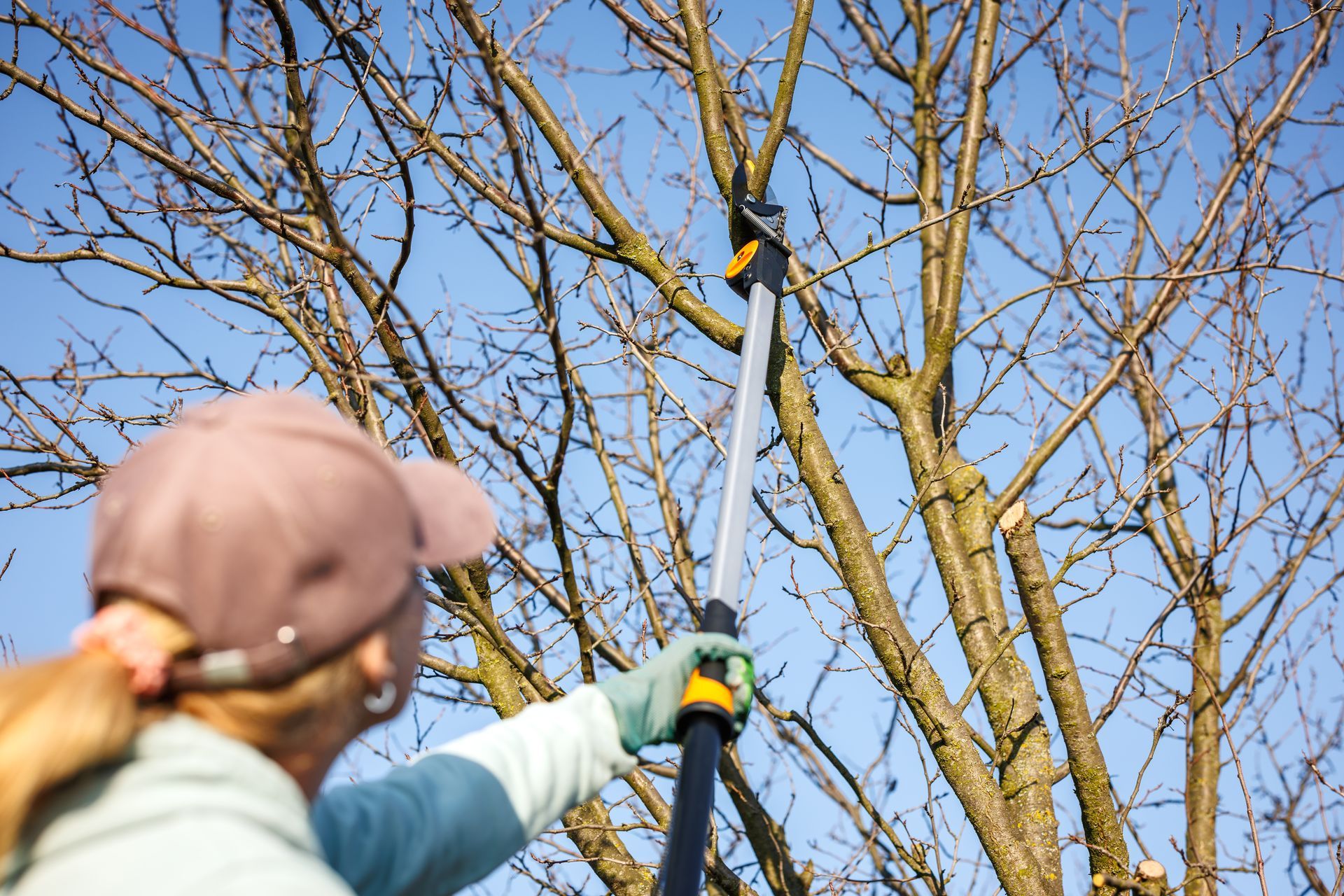
Good tree trimming is about where and how cuts are made, not how much wood comes off. Proper pruning cuts are made just outside the branch collar, the slightly swollen area where a limb joins the trunk or a larger branch. Cutting at this point allows the tree to seal the wound naturally. Flush cuts that remove the collar, or stubs left too long, slow wound closure and invite decay.
The amount removed matters as well. As a general guideline, no more than about a quarter of a tree's live canopy should be removed in a single season, and less on older or stressed trees. Over-thinning a live oak or pecan exposes interior bark to sunscald, triggers a flush of weak sprouts, and reduces the leaf area the tree needs to produce energy. Tree trimming in Dallas also has to account for oak wilt. The Texas A&M Forest Service recommends avoiding oak pruning from February through June when the beetles that spread the disease are most active, and painting every fresh oak wound immediately whenever oaks must be trimmed, regardless of season.
Tree Removal
Fully Licensed & Insured for Emergency Work
Aguilar Tree Service is fully licensed and insured, protecting property owners and crew members during high-risk work such as removing trees from roofs and clearing storm damage.
03
Tree Trimming Services We Provide
Aguilar Tree Service offers several types of tree trimming in Dallas, each designed to solve a specific problem in the canopy.
Deadwood Removal
Deadwood removal cuts out dead, dying, and broken branches throughout the canopy. Dead limbs are brittle and can drop without warning, especially in wind. Removing them also eliminates entry points for decay and pests and makes it easier to spot other structural concerns in the tree.
Crown Reduction
Crown reduction lowers the height or spread of a tree by cutting branches back to healthy lateral limbs large enough to take over as the new branch end. This form of tree trimming reduces weight and wind resistance while keeping the tree's natural shape. Crown reduction is very different from topping, which cuts limbs back to stubs and leads to decay and weakly attached regrowth.
Canopy Management
Canopy management includes thinning dense crowns, removing crossing and rubbing branches, and correcting poor structure. Selective thinning allows wind and light to pass through the canopy, reducing the sail effect that causes branches to snap during storms. On younger trees, structural pruning establishes a strong central leader and well-spaced scaffold limbs that will hold up as the tree matures.
Clearance From Roofs & Structures
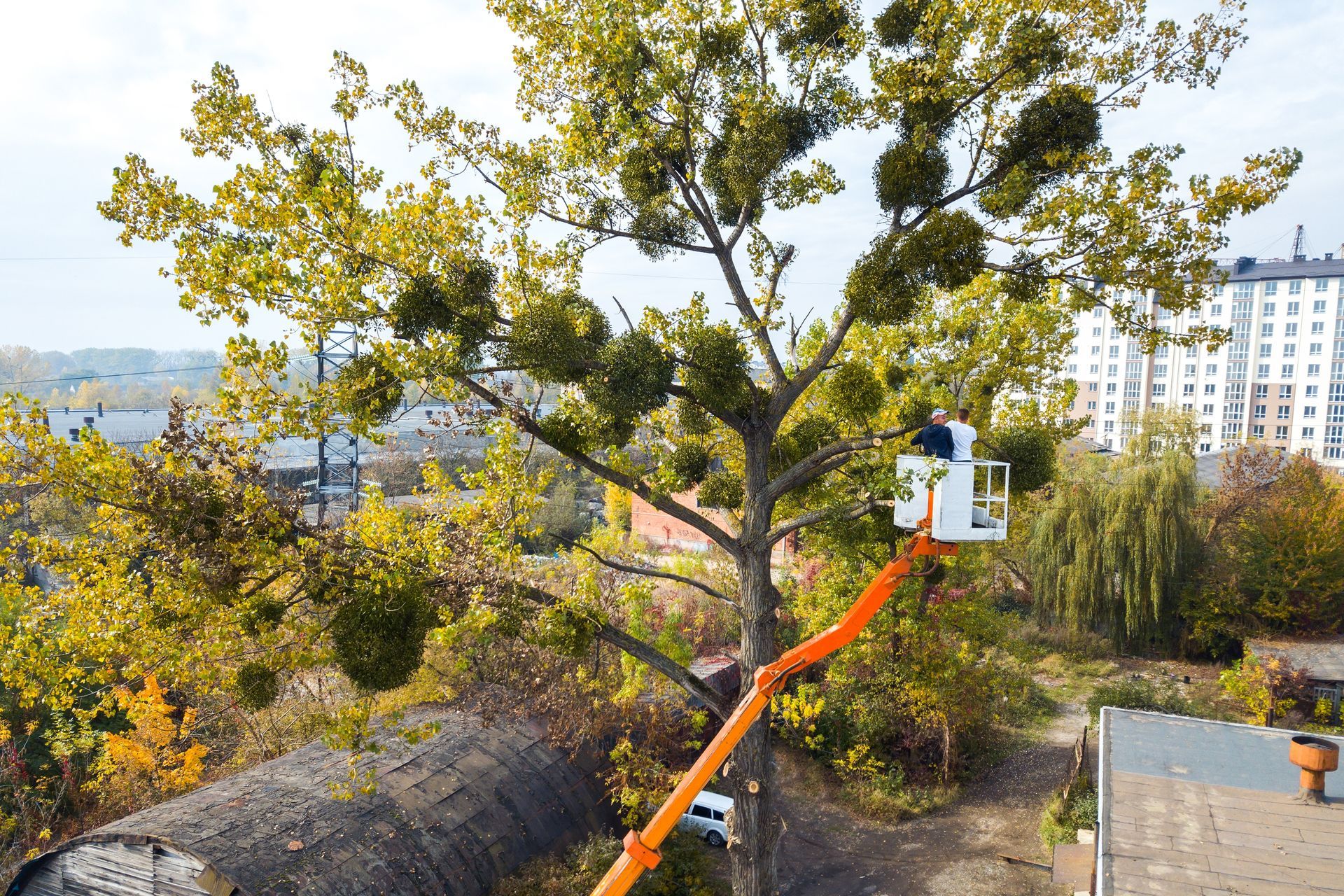
Branches touching or hanging over roofs scrape shingles, drop debris into gutters, and give squirrels and rats easy access to attics. Clearance tree trimming pulls limbs back from roofs, walls, chimneys, and HVAC units. Canopy raising lifts the lower limbs for clearance over driveways, sidewalks, and streets. The City of Dallas generally requires branches to be kept well above sidewalks and streets so pedestrians and vehicles can pass safely, and clearance trimming keeps properties in line with those standards.
Hazardous Branch Removal
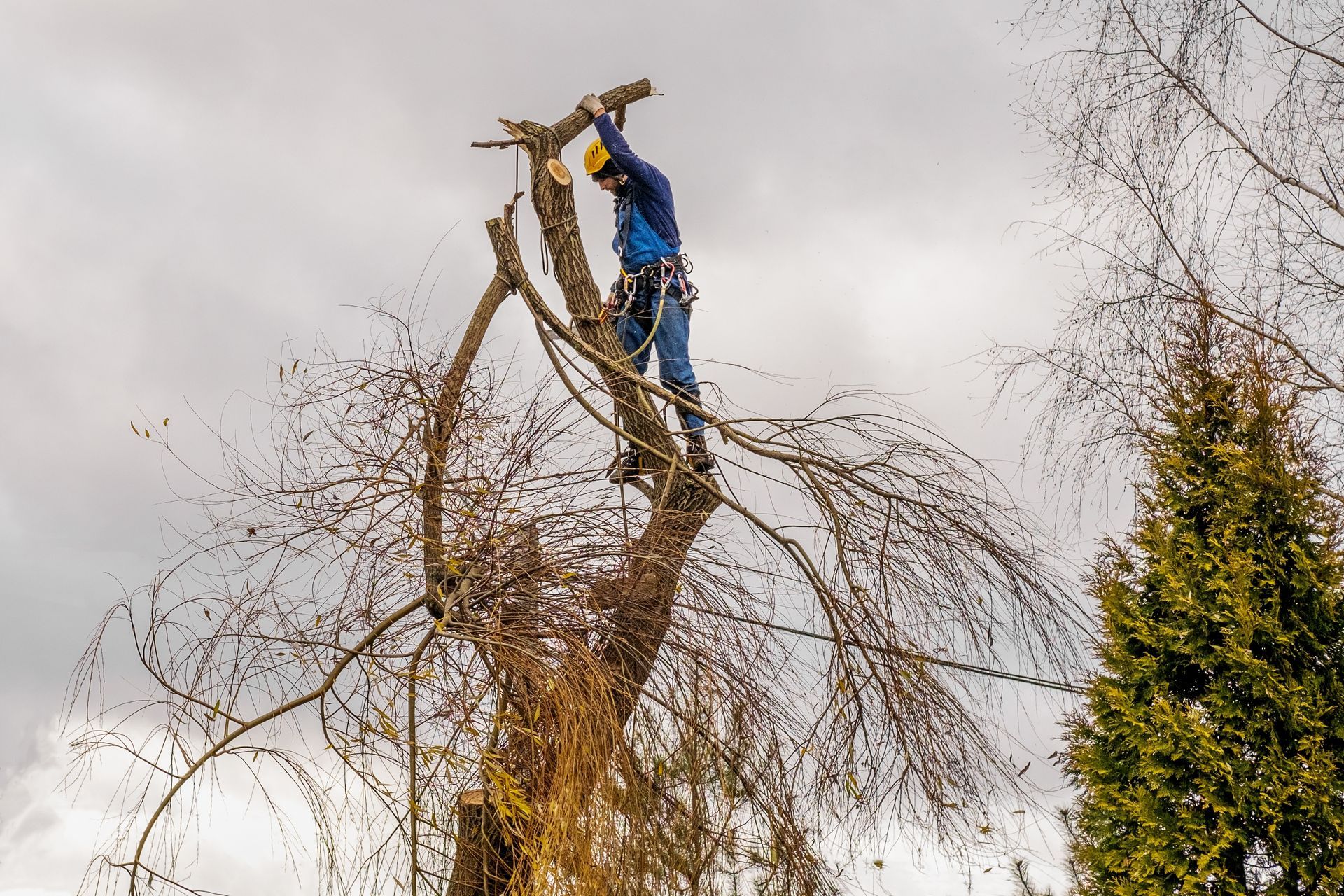
Hazardous branch removal targets limbs that are cracked, split at the union, hanging broken in the canopy, or extending heavily over structures, play areas, or parking spaces. These limbs are removed in controlled sections and lowered with ropes when needed so they do not damage anything below.
Request a free estimate from Aguilar Tree Service for tree trimming on your Dallas property.
Why Regular Tree Pruning Matters
Regular tree trimming reduces the chance of branch failure. Most limb failures in Dallas storms happen at weak unions, along overextended limbs, or in dense canopies that catch wind. Correcting these issues ahead of storm season lowers the risk of a branch landing on a roof, car, or fence.
Pruning also supports tree health. Removing dead and diseased wood limits the spread of decay and fungal problems such as hypoxylon canker, which commonly affects drought-stressed oaks and elms in North Texas. Thinning improves airflow through the canopy, helping leaves dry faster and reducing conditions that favor some leaf diseases.
Young trees benefit the most from regular tree trimming. Structural pruning in the first ten to fifteen years shapes the tree's framework and prevents problems that would be expensive or impossible to correct later. A mature tree with poor structure often requires cabling, heavy reduction, or eventual removal, while the same tree pruned properly when young may never need that level of intervention.
How Often Trees Should Be Trimmed
Most mature trees in Dallas benefit from tree trimming every three to five years. Younger trees often need structural pruning every one to three years. Fast-growing species, trees over roofs, and trees along driveways and sidewalks may need more frequent attention.
Residential Tree Service
Our Tree Trimming Process
Every tree trimming job from Aguilar Tree Service
follows a consistent process so the results are predictable and the tree is left healthier than before.
Tree Evaluation
The process begins with an inspection of the tree's species, canopy density, branch structure, deadwood, signs of disease, and proximity to structures and utility lines. This evaluation determines which type of tree trimming is appropriate and how much should be removed.
Trimming Plan
Based on the evaluation, a trimming plan is set that outlines which limbs come out, which are reduced, and how much clearance will be achieved. For oaks, the timing of the work is also considered to reduce oak wilt risk.
Pruning Cuts and Limb Lowering
Branches are removed with proper pruning cuts at the branch collar or a suitable lateral limb. Larger limbs are cut in stages to prevent bark tearing, and limbs over roofs, fences, or landscaping are lowered with rigging so nothing crashes down onto the property.
Cleanup
Once the tree trimming is complete, branches are chipped or hauled away and the yard is raked and cleaned. Property owners can request to keep wood chips for mulch.
Trees Near Power Lines
Any tree trimming near energized power lines must be coordinated with the utility. If branches are touching or growing into service lines, contact Oncor or your electric provider before any work begins.
Residential & Commercial Tree Care
Residential tree trimming in Dallas often involves large live oaks, pecans, cedar elms, and red oaks growing over homes in established neighborhoods such as Lakewood, Preston Hollow, Lake Highlands, and Kessler Park. Homeowners usually call for tree trimming to clear branches from roofs, raise canopies over driveways and lawns, remove dead limbs, and thin heavy crowns before storm season. Work is done with care around fences, gardens, pools, and irrigation systems.
Commercial tree trimming serves retail centers, apartment communities, office parks, schools, churches, and HOA common areas. Commercial properties typically need tree trimming to maintain clearance over parking lots and drive lanes, keep signage and security cameras visible, protect pedestrians along walkways, and maintain a consistent appearance across the property. Commercial work can be scheduled during off-peak hours to limit disruption to tenants and customers.
Recurring Maintenance Schedules
Properties with many trees often benefit from a rotating tree trimming schedule, where a portion of the trees are pruned each year. This spreads out the cost and keeps every tree on a regular maintenance cycle.
FAQs
What is the difference between tree trimming and tree pruning?
The terms are often used interchangeably. Tree pruning usually refers to selective cuts made for tree health and structure, such as removing dead, diseased, or poorly attached branches. Tree trimming often refers to cutting back growth for clearance and appearance. Professional tree trimming typically includes both.
How much does tree trimming cost in Dallas, TX?
The cost of tree trimming in Dallas depends on the size of the tree, the amount of work needed, access to the tree, and whether branches hang over structures or power lines. A small ornamental tree costs far less than a large live oak that needs extensive clearance work. An on-site estimate provides the most accurate price.
When is the best time for tree trimming in Dallas?
Late fall through winter is generally the best time for tree trimming in Dallas because most trees are dormant, structure is easier to see on deciduous trees, and pest activity is low. Oaks should be pruned outside the February through June window to reduce oak wilt risk. Dead or hazardous limbs can be removed any time of year.
How often should trees be trimmed?
Most mature trees benefit from tree trimming every three to five years, while young trees should be pruned every one to three years to establish good structure. Trees near roofs, driveways, or sidewalks may need trimming more often.
Can tree trimming kill a tree?
Improper tree trimming can seriously harm a tree. Removing too much canopy at once, making flush cuts, leaving stubs, or topping a tree can lead to stress, decay, and decline. Proper pruning that follows accepted standards strengthens the tree rather than harming it.
What is tree topping, and why is it harmful?
Tree topping cuts large branches back to stubs without regard for the tree's structure. It removes much of the leaf area, creates large wounds that decay, and produces dense regrowth that is weakly attached and prone to breaking. Crown reduction is the proper alternative when a tree needs to be made smaller.
Should oak trees be trimmed in spring?
Oak trees in Dallas should not be trimmed in spring unless absolutely necessary, such as removing a hazardous limb. Spring is the highest-risk period for oak wilt transmission. Any time an oak is trimmed, the cuts should be painted immediately with wound paint.
Can I trim branches from my neighbor's tree that hang over my yard?
In Texas, you can generally trim branches that extend over your property line, up to the property line, as long as the trimming does not damage or kill the tree. Talking with your neighbor first is a good practice and helps avoid disputes.
Does tree trimming help prevent storm damage?
Yes. Tree trimming removes dead wood, weak branch unions, and overextended limbs that commonly fail in storms. Thinning the canopy also reduces wind resistance, lowering the strain on branches during high winds.
How much of a tree can be trimmed at one time?
As a general guideline, no more than about 25 percent of a tree's live canopy should be removed in a single season. Older, stressed, or drought-affected trees should have even less removed to avoid shock.
Who is responsible for trimming trees near power lines in Dallas?
Utility companies such as Oncor are generally responsible for trimming trees around primary distribution lines. Homeowners are typically responsible for trees around the service line running from the pole to the house. Contact your electric provider before any tree trimming near power lines.
Is tree trimming necessary if my tree looks healthy?
A tree can appear healthy while carrying dead interior limbs, weak unions, or branches growing toward the house. Routine tree trimming catches these issues early, before they lead to broken limbs or property damage.
Request a Free Tree Removal Estimate
If you have a dead tree in the backyard, a leaning tree near your home, a storm-damaged tree that needs to come down, or a tree blocking a construction project, Aguilar Tree Service will evaluate it on site and give you a clear plan and price before any work starts. We provide tree removal for homeowners, HOAs, and commercial property owners throughout Dallas and the surrounding communities.
Contact Aguilar Tree Service
now to request your free tree removal estimate in Dallas, TX.